
Secure data access for AI development
We help enterprises safely unlock unstructured data for AI.
Protect sensitive information, transform documents into structured data, and generate realistic synthetic content—for AI, business operations, and testing.
Offline on-premises Sales-assisted SaaS Web platform + APIs
DocumentsPDFImagesJPGAudioMP3
Control what you share.
Remove identifying information. Retain the content you need.
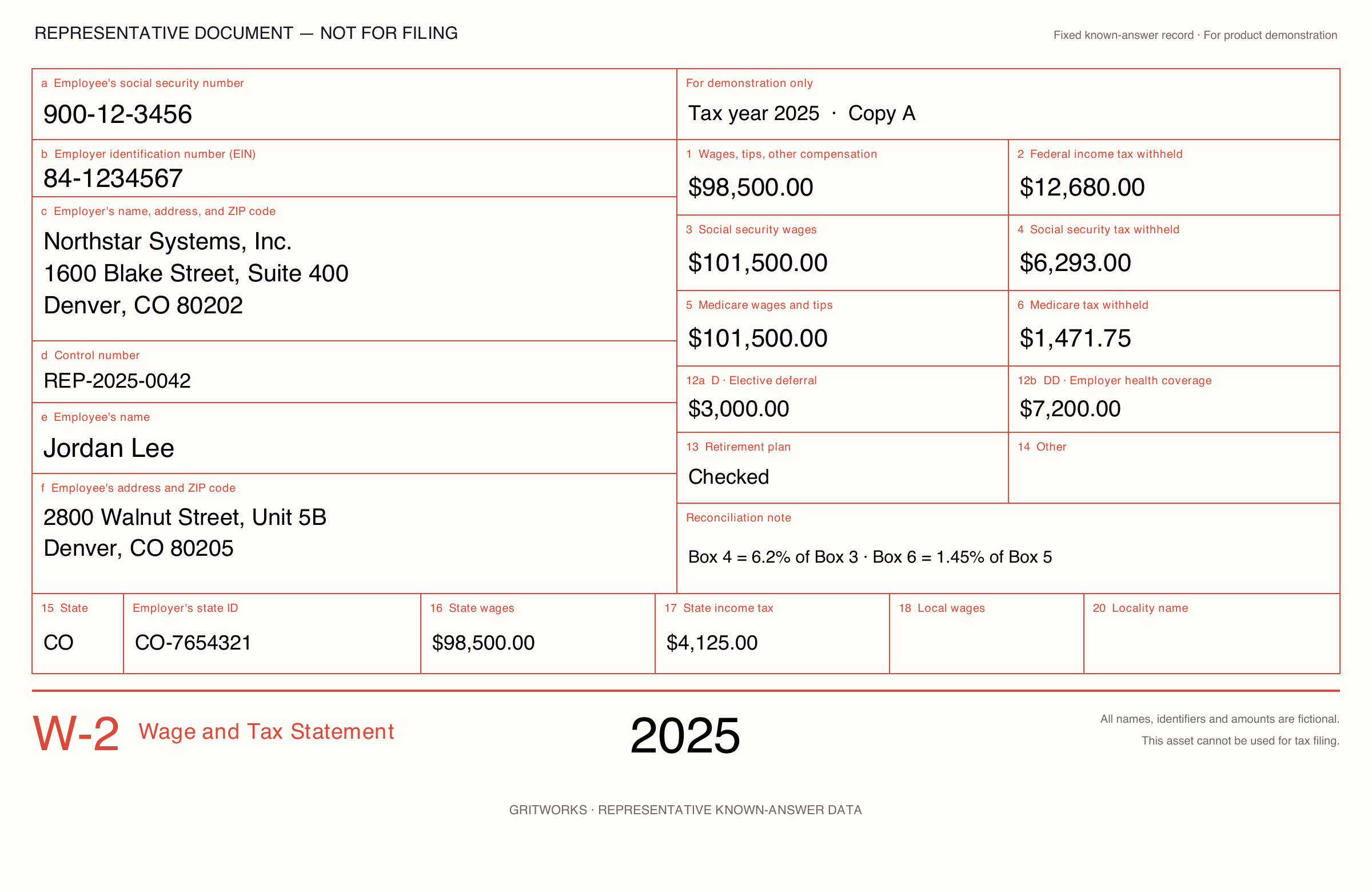
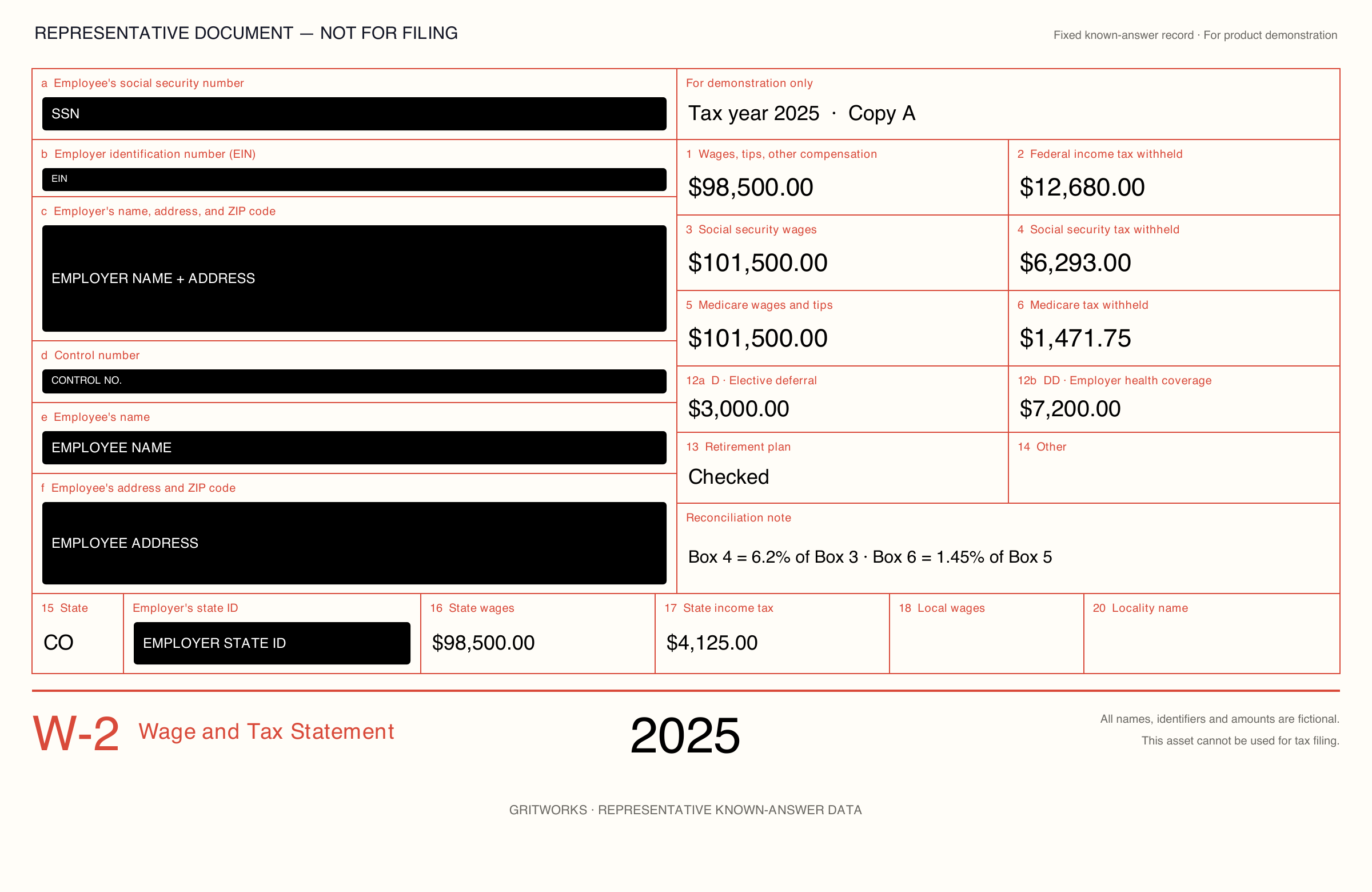
Redaction for documents, images and audio.
Get the data out of the document.
Turn information in PDFs and images into structured fields.
{
  "tax_year": "2025",
  "employee": "Jordan Lee",
  "wages": 98500,
  "federal_tax": 12680
}
JSON output for your applications and APIs.
Test beyond the perfect sample.
Create realistic variations with known values to test against.
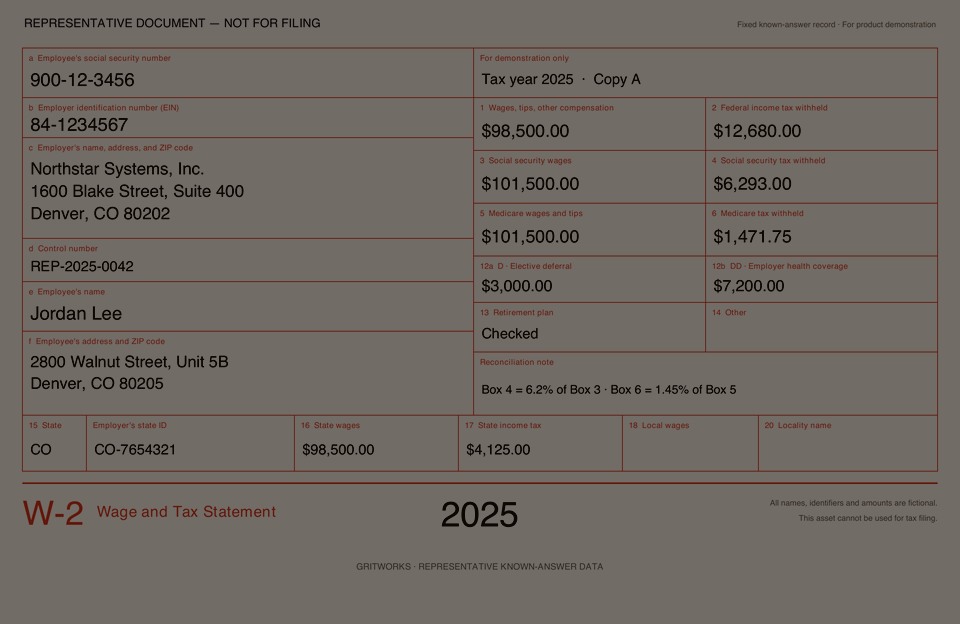 Low light
 Blur
Blur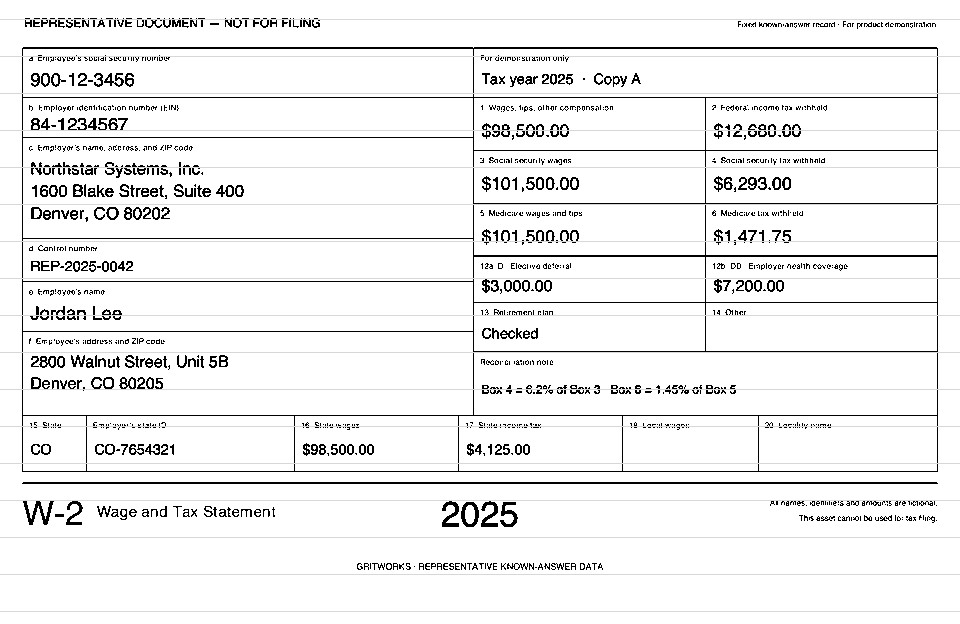 Fax
Fax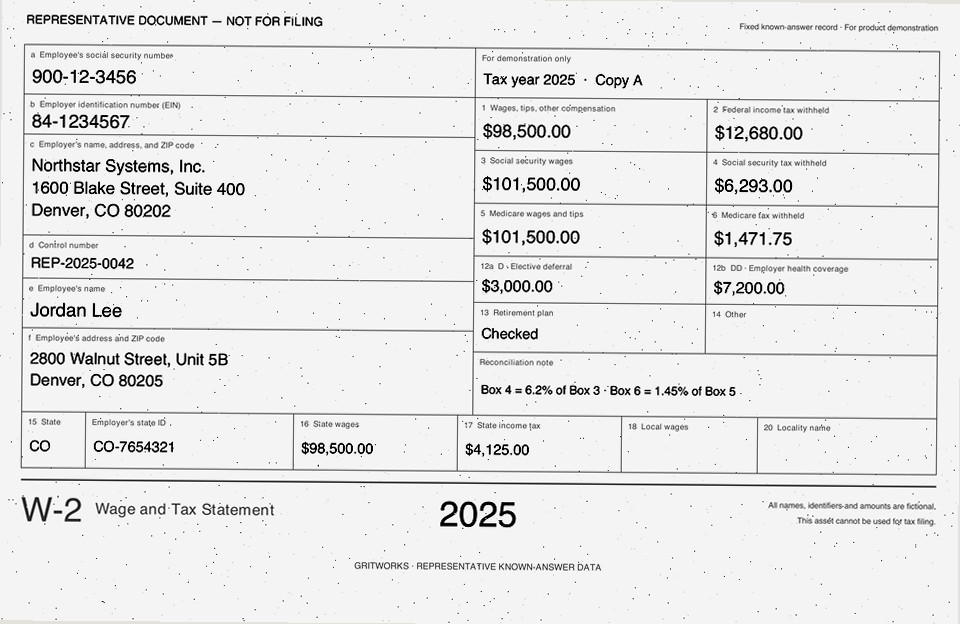 Photocopy
Synthetic documents, images and audio for testing.
Illustrative document example · Fictional dataExplore the products
Our customers





Built for regulated environments
Financial servicesInsuranceHealthcareLegal
Why GritWorks
Intelligence will be abundant. Trust will not.
Agents operate in a world of information. Humans live with the consequences.
As intelligence and efficiency become available to every enterprise, trust becomes the advantage that remains difficult to earn—and remarkably easy to lose.
Read why GritWorks existsThe problem
Your enterprise runs on information that systems struggle to use.
Contracts, statements, claims, images and recordings hold essential business context. Using that information means protecting sensitive details, extracting what matters and testing against realistic conditions.
GritWorks helps you move from source content to useful outputs for the people, applications and AI systems that need them.
Sensitive content needs control
Documents and recordings contain more information than a recipient needs. Prepare content for its intended use without exposing unrelated sensitive details.
Information is trapped in documents
Business systems need structured records. The information they need arrives in PDFs, scans and images that must be turned into usable data.
Test coverage misses real conditions
Clean samples miss damaged scans, rare cases and inconsistent inputs. Teams need realistic scenarios with known results to test with confidence.
What GritWorks does today
Protect. Transform. Generate.
Three products for making unstructured data usable. Use them independently or together, through offline on-premises deployment or a sales-assisted SaaS subscription.
01GritRedactCONTROLLED REAL DATA
Protect sensitive content for its next use.
Detect sensitive information, apply your policy and review the output before sharing content with approved teams and systems.
- PDF, image and audio workflows
- Human review and audit evidence
- Offline on-premises or SaaS
02GritTransformSTRUCTURED DOCUMENT DATA
Turn documents into data your systems can use.
Extract information from PDFs and images into JSON for business applications, analytics and automated workflows.
- PDF and image extraction
- JSON output through APIs
- Offline on-premises or SaaS
03GritRenderSYNTHETIC EVALUATION DATA
Generate realistic content with known answers.
Create synthetic documents, images, audio and edge cases to develop and test applications, extraction pipelines and AI systems.
- Known values and expected outputs
- Controlled variations and edge cases
- Offline on-premises or SaaS
See an example One document. Three ways to put it to work.
ONE SOURCE DOCUMENT / THREE PRODUCT PATHS KNOWN-ANSWER DATA
01 / SOURCEOne source document
02A / GRITREDACTRedact the source
02B / GRITTRANSFORMExtract structured data
JSON OUTPUT
{
  "tax_year": "2025",
  "employee": "Jordan Lee",
  "wages": 98500,
  "federal_tax": 12680
}02C / GRITRENDER
Render the source into test variantsValues stay fixed; only the visual condition changes
* Representative document shown for product demonstration. All names and identifiers are fictional.
Where customers start
Put unstructured data to work across your enterprise.
Start with the outcome you need. Our products help teams prepare content, extract information, build AI systems and test real business workflows.
Controlled content sharing
Create purpose-specific derivatives of documents, images or audio without circulating the full original.
Application and AI testing
Test extraction, transcription and business workflows using realistic synthetic content with known expected results.
AI and RAG data preparation
Prepare approved content with GritRedact and extract structured information from PDFs and images with GritTransform for downstream data and AI workflows.
AI system training and fine-tuning
Build de-identified corpora and synthetic examples that retain useful structure, modality, variation and labels without distributing source records.
Document-to-data operations
Convert information in PDFs and images into JSON that your applications and data pipelines can access through an API.
Enterprise evidence
Sensitive-content workflows implemented or evaluated in enterprise environments.
Three anonymized studies show how healthcare and financial-services teams used controlled real data, synthetic documents, or both—with engagement stage disclosed where the proof is summarized.
Healthcare · Enterprise pilotGritRedact
Reusable corpusReal handwriting retained; member identities removed
Unlocking handwritten clinical data for agentic AI testing
U.S. health insurance and services organization
Read the case study
Healthcare · Technical evaluationGritRender
30+ variantsControlled document degradations with known ground truth
Expanding laboratory requisition OCR test coverage
U.S. diagnostic services provider
Read the case study
Financial services · Production deploymentGritRedact + GritRender
Redact → generateProduction-faithful loan files without production NPI
Securing loan document testing with a redact-then-generate workflow
U.S. housing-finance organization
Read the case study
Industry workflows
Built around the unstructured content your business actually runs on.
From loan files and claim packets to clinical records and contracts, start with the content and workflow your team needs to use.
BA
SAFE UNSTRUCTURED DATA FOR FINANCIAL SERVICES
→INBanking
Bank statements · KYC and ID images · Loan files · Servicing recordings
SAFE UNSTRUCTURED DATA FOR INSURANCE
→HEInsurance
Claims packets · Damage photos · Medical evidence · Call recordings
PRIVACY-CONSCIOUS DATA FOR HEALTHCARE AI
→LEHealthcare
Clinical notes · Claims and EOBs · Medical images · Patient calls
CONTROLLED CONTENT FOR LEGAL WORKFLOWS
→Legal
Contracts and case files · Correspondence · Deposition audio · Discovery productions
Built for the buying committee
One data problem. Different reasons to care.
Operations teams need usable information. Data and AI teams need structured inputs. Quality teams need coverage, and security teams need control.
See the Databricks workflowDesigned to fit
Your workflow. Your deployment choice.
Run all three products offline on your own infrastructure, or choose a sales-assisted SaaS subscription for mid-market and smaller teams. Work through the web platform and integrate through APIs. We’ll help you find the right fit.
SourcesContent stores
Lakehouse
Case systems
→Lakehouse
Case systems
GritWorksRedact
Transform
Render
→Transform
Render
DestinationsBusiness systems
AI & analytics
Test environments
AI & analytics
Test environments
From the blog
Working notes on unstructured data.
Perspectives on redaction, document extraction and synthetic content.

From PDF to Reliable JSON: Define the Extraction Contract Before the API
Define field meaning, missing-value behavior, source evidence and acceptance rules before connecting document extraction to a downstream application.
How to Test OCR Accuracy on Scanned Documents: A Field-Level Evaluation Guide
Measure OCR and document-extraction quality with known answers, field-level scoring, realistic scan conditions, and a repeatable regression scorecard.

How Regulated Industries Can Accelerate AI Without Compromising Compliance
A practical approach to preparing sensitive documents for AI: define the permitted use, choose the right deployment, validate the output, and make approved workflows repeatable.
Common questions
Choose the right data workflow.
Where does GritWorks process my data?
Your choice. All three products can run offline on-premises inside your infrastructure. GritRedact installs via Docker in your environment and runs fully offline with no network egress, so source content stays within your boundary — your data center, private cloud or VPC, Kubernetes or air-gapped. Teams that want a hosted option can use a sales-assisted SaaS subscription through the web platform and APIs.
What is the difference between GritRedact, GritTransform and GritRender?
GritRedact creates a reviewed copy of real content with sensitive information removed: it detects PII, PHI and custom entities, applies your policy with human review, permanently redacts approved information and records an audit trail. GritTransform extracts information from PDFs and images into structured JSON that applications reach through an API. GritRender generates synthetic documents, images, audio and scenarios with known values for development, training and testing. Use them independently or together.
Does using GritRedact mean my data is HIPAA de-identified?
No. Automated redaction alone is not a declaration of HIPAA de-identification. Policies, validation and human review must match the intended use and recipient.
Can redaction replace access control?
No. If a user or agent is not entitled to a record, the correct answer is to block retrieval. Redaction applies after the permitted purpose and minimum necessary content are known; it is not an authorization mechanism.
Does GritTransform's PII flagging redact the document?
No. GritTransform can flag potentially sensitive values in its results, but flagging does not redact the source. Use GritRedact when sensitive content must be removed; GritTransform can also extract from documents GritRedact has already processed.
What content types does GritWorks handle?
Unstructured content: documents, images and audio — including scanned forms, identity images and recordings. GritRedact and GritRender work across documents, images and audio; GritTransform extracts from PDFs and images. Masking columns in an existing database is a different kind of tool.
Is there a public API, SDK or MCP server?
No. Customers get the web platform and APIs after sales-assisted onboarding — for example, GritTransform deploys a saved extraction as a named API endpoint. There is no public or self-serve API, no free tier, no published SDK package and no MCP server. Engagement starts with a conversation.
Start with your workflow
Put your unstructured data to work.
Tell us what your team needs to achieve. We’ll help you choose the right products, work through your requirements and explore on-premises or SaaS deployment.
Request a working session